


PAN AFRICAN NEWS BLOG
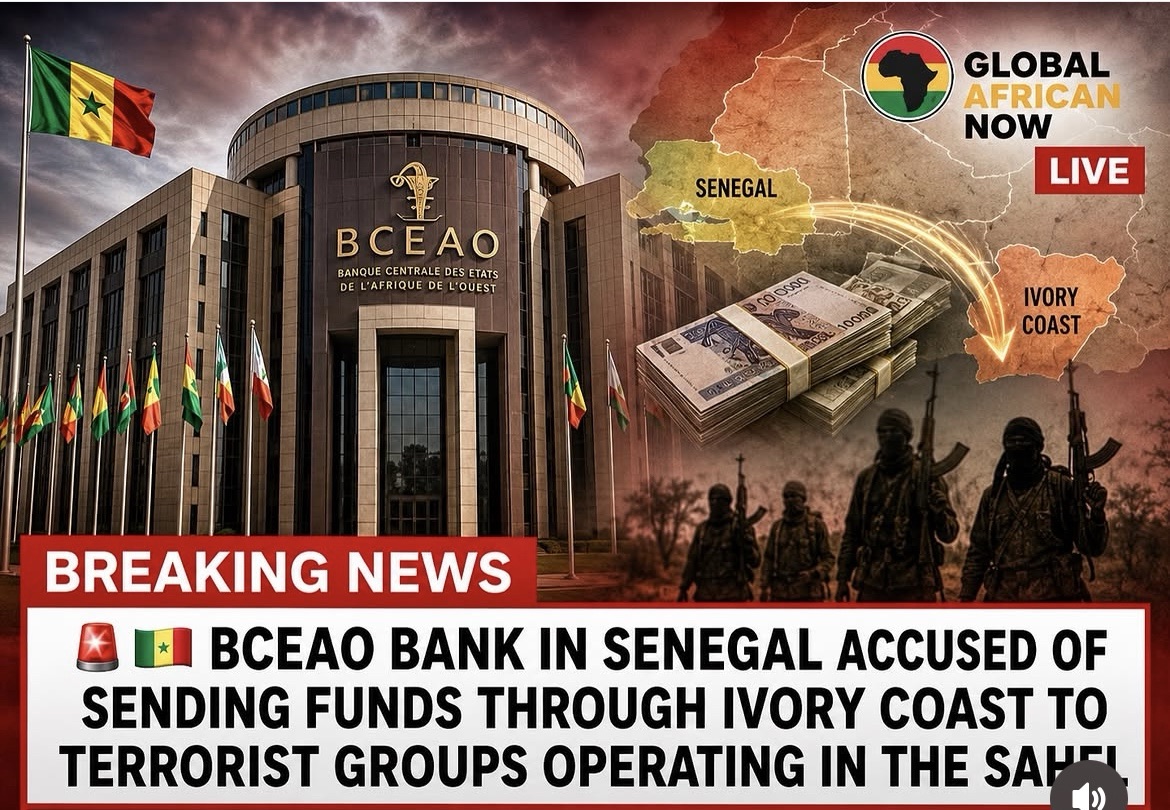
Fresh allegations circulating on social media have drawn renewed attention to the financing of armed extremist groups operating across the Sahel, with claims suggesting that the Central Bank of West African States (BCEAO), headquartered in Dakar, Senegal, was involved in routing funds through Côte d’Ivoire to terrorist organizations active in the region.
The allegations, shared by the social media platform Global African Now, have quickly spread online, prompting debate across West Africa. At the time of publication, however, no independent evidence has been publicly presented to substantiate these claims, and no official investigation confirming the allegations has been announced.
Serious Claims Require Serious Evidence
The accusations are significant because they concern the BCEAO, the regional central bank responsible for monetary policy and financial stability for the eight member countries of the West African Economic and Monetary Union (WAEMU/UEMOA). The institution plays a vital role in managing the CFA franc currency and overseeing aspects of the region’s financial system.
According to the circulating posts, funds were allegedly routed through Côte d’Ivoire before reaching terrorist groups operating throughout the Sahel. The claims further suggest that such financial support may have contributed to ongoing attacks against civilians and military personnel in countries including Mali, Burkina Faso, and Niger.
These allegations remain unverified. As of this writing, no judicial authority, financial regulator, or international investigative body has publicly confirmed the claims.
The Security Crisis in the Sahel
The Sahel has experienced years of escalating violence involving jihadist organizations linked to groups such as al-Qaeda and the Islamic State. The conflict has displaced millions of people and created one of Africa’s most significant humanitarian and security challenges.
Governments in Mali, Burkina Faso, and Niger have repeatedly emphasized the importance of disrupting terrorist financing networks, arguing that cutting off financial resources is essential to weakening armed groups.
International organizations, including the Financial Action Task Force (FATF) and regional financial intelligence units, have long worked with African governments to detect and prevent money laundering and terrorist financing.
Calls for Transparency
The social media post argues that, should the allegations ultimately be proven through credible evidence and legal proceedings, they would represent a profound breach of public trust. It calls for an independent investigation and full transparency regarding any individuals or institutions that may have facilitated financial transfers to extremist organizations.
Financial crimes involving terrorist financing are among the most serious offenses under international law and generally require extensive forensic investigations, banking records, intelligence cooperation, and judicial review before conclusions can be reached.
Importance of Responsible Reporting
Because of the gravity of these accusations, journalists and readers alike should distinguish between verified facts and unconfirmed allegations. Publishing or sharing claims without supporting evidence can contribute to misinformation and unfairly damage institutions or individuals.
If credible evidence emerges, investigations by the appropriate national, regional, and international authorities will be essential to determine the facts and ensure accountability where warranted.
Until then, these allegations should be regarded as claims that have not been independently verified.
Conclusion
The spread of these allegations reflects growing public concern about the sources of funding behind extremist violence in the Sahel. Whether the claims prove true or false, the episode underscores the importance of transparency, effective financial oversight, and independent investigations whenever serious allegations involving public institutions are made.
Pan-African News Blog will continue to monitor developments and provide updates should official statements, credible evidence, or formal investigations become available.