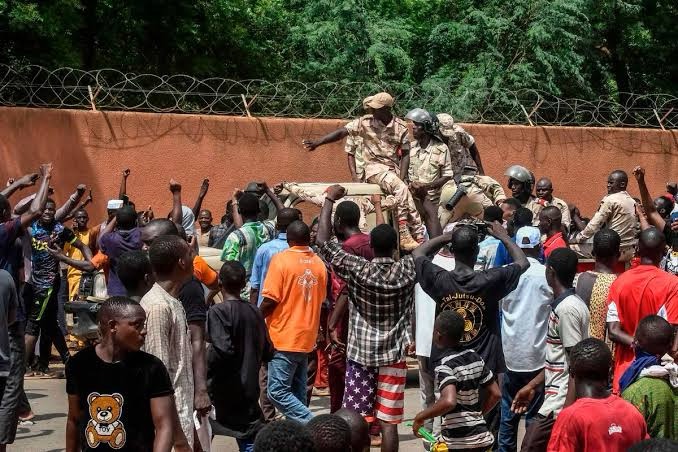
More than a decade after France launched its military intervention in the Sahel in 2013, the security situation across one of Africa’s most strategically important regions continues to deteriorate. Despite billions of dollars in military spending, international partnerships, and countless military operations, extremist organizations have expanded their influence across a territory stretching from the Atlantic Ocean to the Red Sea—a landmass comparable in size to the entire European continent.
Today, the Sahel stands at the center of one of the world’s most complex security, political, and humanitarian crises. As foreign powers reassess their role in the region and African nations seek new solutions, many are asking a difficult question: Why has terrorism continued to spread despite years of international intervention?
Understanding the Sahel
The Sahel is a vast semi-arid belt that forms a transitional zone between the Sahara Desert in the north and the more fertile regions of sub-Saharan Africa in the south. It stretches across countries including Burkina Faso, Mali, Niger, Chad, Mauritania, and parts of Nigeria, Cameroon, and Sudan.
Home to millions of people representing hundreds of ethnic groups and cultures, the region has historically served as a crossroads for trade, migration, and cultural exchange. However, decades of poverty, weak state institutions, climate change, and political instability have created fertile ground for armed insurgencies and extremist organizations.
The French Intervention of 2013
In January 2013, France launched Operation Serval after armed militant groups advanced toward Mali’s capital, Bamako. The intervention was initially viewed as a success, quickly pushing insurgent forces out of major urban centers in northern Mali.
The operation later evolved into Operation Barkhane, a larger regional counterterrorism mission involving thousands of French troops deployed across the Sahel.
Western governments praised the intervention as a necessary effort to prevent extremist groups from establishing territorial control and threatening regional stability. Yet while militants were removed from key cities, many simply dispersed into rural areas, deserts, and border regions where state presence was minimal.
Over time, extremist organizations adapted, regrouped, and expanded their networks.
The Expansion of Armed Groups
Rather than disappearing, militant organizations evolved into decentralized networks capable of operating across multiple countries simultaneously.
Groups affiliated with Al-Qaeda and the Islamic State exploited local grievances, intercommunal conflicts, and distrust of government authorities. In many rural communities, armed groups filled governance vacuums by offering protection, dispute resolution, and economic opportunities where governments struggled to provide basic services.
As a result, violence spread from northern Mali into central Mali, Burkina Faso, Niger, and beyond.
Burkina Faso, once considered one of West Africa’s most stable nations, has experienced a dramatic surge in insecurity. Entire villages have been displaced, schools have closed, and military outposts have come under repeated attack.
Similarly, Niger and Mali have faced growing challenges securing vast stretches of territory where state institutions remain weak.
The Geography Challenge

One of the greatest obstacles facing counterterrorism efforts in the Sahel is geography itself.
The region’s immense size creates enormous logistical challenges. Desert landscapes, porous borders, and remote communities make it difficult for governments to monitor movements or maintain consistent security presence.
The Sahel covers millions of square kilometers—an area roughly comparable to Europe. Militants often move across borders with relative ease, taking advantage of jurisdictional gaps between neighboring states.
This reality has led many analysts to argue that purely military solutions are insufficient.
Coups and Political Transformation
The persistence of insecurity has also contributed to a wave of political upheaval.
Since 2020, several Sahelian countries have experienced military coups, including Mali, Burkina Faso, and Niger. Military leaders often justified their actions by citing governments’ inability to address terrorism and protect citizens.
These political changes have reshaped regional alliances and altered relationships with traditional Western partners, particularly France.
In several countries, public frustration over continued violence fueled anti-French sentiment. Demonstrations calling for the withdrawal of foreign troops became increasingly common.
As a result, French military forces have largely withdrawn from key Sahelian nations, while new security partnerships have emerged with other international actors.
The Humanitarian Cost
Behind the geopolitical headlines lies a devastating human toll.
Millions of people across the Sahel have been displaced by violence. Families have fled their homes, agricultural production has been disrupted, and access to healthcare and education has deteriorated in many affected regions.
Children are among the most vulnerable victims of the crisis. School closures have deprived entire generations of educational opportunities, increasing the risk of recruitment by armed groups and deepening cycles of poverty.
Climate change has further intensified these challenges. Droughts, desertification, and competition over land and water resources have increased tensions among communities already under pressure.
An African Solution for an African Crisis?
Across the continent, growing numbers of policymakers, scholars, and civil society leaders argue that long-term stability cannot be achieved through military force alone.
Many advocate for a comprehensive strategy centered on economic development, infrastructure investment, youth employment, agricultural modernization, and stronger local governance.
Supporters of this approach contend that addressing the root causes of instability—including poverty, marginalization, corruption, and lack of opportunity—is essential for reducing the appeal of extremist organizations.
The conversation has also become increasingly tied to broader Pan-African discussions regarding sovereignty, regional cooperation, and self-determination.
Organizations such as the Economic Community of West African States (ECOWAS) and the African Union continue to explore frameworks that emphasize African-led security initiatives and regional collaboration.
The Road Ahead
The Sahel remains one of the most consequential regions for Africa’s future. What happens there will influence migration patterns, economic development, regional security, and international relations for decades to come.
More than ten years after France’s intervention, the expansion of terrorist groups demonstrates that military victories alone cannot guarantee lasting peace. The challenge facing African leaders today is not merely defeating insurgencies but creating conditions where extremism can no longer thrive.
For the people of the Sahel, the stakes could not be higher. The future of this vast region depends on finding solutions that combine security with development, sovereignty with cooperation, and stability with opportunity.
As Africa continues to shape its own destiny in an increasingly multipolar world, the Sahel may ultimately become a defining test of the continent’s ability to overcome one of its most persistent and complex challenges.
Pan African News Blog
Reporting African affairs through a Pan-African lens.
Leave a Reply